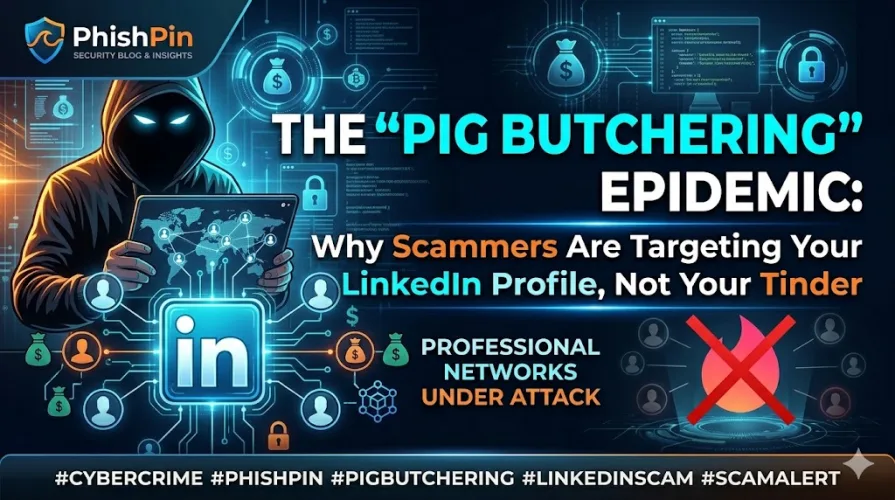
The "Pig Butchering" Epidemic: Why Scammers Are Targeting Your LinkedIn Profile, Not Your Tinder
When we think of romance scams or fraudulent investment schemes, we usually think of dating apps or sketchy Instagram DMs. But in 2026, the dangerous financial fraud known as "Pig Butchering" (Sha Zhu Pan) has migrated to a place you’d least expect: LinkedIn.
Cybercriminals have realized that targeting professionals on a career network yields far bigger payouts. They aren't looking for a quick $50 gift card anymore. They are looking to drain corporate savings accounts, 401(ks), and venture capital.
Here is how this devastating scam works, why it is trending aggressively right now, and how professionals are being targeted.
What is "Pig Butchering"?
The term comes from the practice of fattening up a pig before it is slaughtered. In the digital world, scammers create highly sophisticated, AI-generated fake profiles pretending to be successful industry executives, venture capitalists, or attractive financial analysts.
They connect with you under the guise of "networking," "business partnerships," or "job opportunities."
The scam moves slowly:
The Fattening Phase: For weeks or even months, they build a deep, seemingly authentic relationship with you. They talk about business, share industry insights, and build trust. They might even move the conversation to encrypted apps like WhatsApp or Signal.
The Bait: Eventually, they casually mention how they are making massive returns on a new AI-driven cryptocurrency platform, a foreign exchange market, or a private equity investment. Because you trust their professional credentials, your guard is down.
The Slaughter: They guide you to a fake—but incredibly professional-looking—investment website. Initially, they let you withdraw small profits to make it feel real. But once you invest your life savings or corporate funds, the account is frozen, the profile vanishes, and your money disappears into the blockchain.
Why It’s Skyrocketing on Professional Networks in 2026
The shift to LinkedIn and corporate networks is driven by two major factors:
The Illusion of Trust: People expect scammers on dating apps. But on a professional network, we naturally assume a profile with 500+ connections, an Ivy League education, and a premium badge is legitimate.
Generative AI Perfection: In the past, you could spot a scammer by their poor grammar or weird profile photos. In 2026, AI writes flawless, professional business copy, and generates highly realistic, unique headshots that easily bypass reverse-image searches.
How to Spot a Professional "Pig Butcher"
To keep your personal and company assets safe, look out for these massive red flags:
Unsolicited Wealth Dropping: If a new professional connection quickly shifts a business conversation toward their luxurious lifestyle, personal crypto gains, or "exclusive" investment platforms, be highly skeptical.
Moving Off-Platform Immediately: Be wary of connections who insist on moving the conversation to personal texting apps or WhatsApp within the first few messages.
Guaranteed High Returns: No legitimate financial advisor or business contact will ever guarantee massive, risk-free returns. If it sounds too good to be true, it is a financial trap.
The "Camera-Shy" Executive: If they refuse to do a live Zoom or Microsoft Teams video call, or if their video conveniently "malfunctions" whenever you try to chat, you are likely talking to a bot or a scammer using a static profile.
Protect Your Network
Your professional reputation and financial security are intimately connected. Before accepting connections from high-flying executives or beautiful investors offering "exclusive opportunities," do your due diligence. Verify their employment through external corporate directories, and never mix professional networking with unverified financial investments.
Is your brand being impersonated?
PhishPin finds lookalike domains, fake profiles and phishing kits that copy your brand - and gets them taken down. Get a confidential 24-hour audit.
Get my free audit