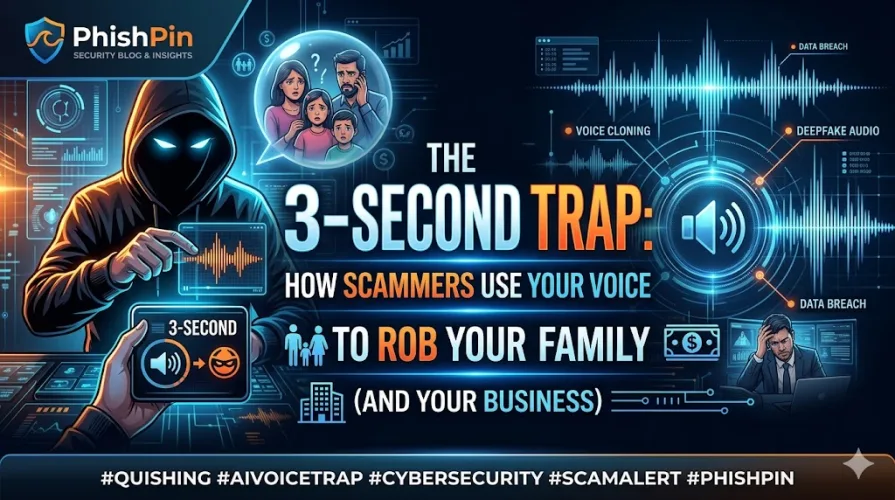
The 3-Second Trap: How Scammers Use Your Voice to Rob Your Family (and Your Business)
"Mom, please help me, I messed up and got into an accident."
It’s the phone call every parent dreads. The voice on the other end sounds exactly like your teenager—the same inflection, the same panic, the same unique speech patterns. Then, a stranger takes the phone, demanding an immediate $5,000 wire transfer to clear the medical bills or the bail.
You rush to send the money. Only later do you find out your child was sitting safely in class the entire time.
You didn't just get scammed. You got hit by an AI Voice Cloning attack.
In 2026, generative artificial intelligence has advanced to a terrifying milestone: with just 3 seconds of audio pulled from a public Instagram Reel, a TikTok video, or a LinkedIn greeting, AI can flawlessly replicate anyone's voice.
Here is how this hyper-targeted threat is hijacking our psychology, and how to protect your loved ones and your business.
From "Grandpa Scams" to Corporate Wire Fraud
Voice cloning isn't just a threat to families; it is actively crippling corporate security.
For years, companies trained employees to spot phishing emails. But what happens when the "CEO" calls the finance department directly?
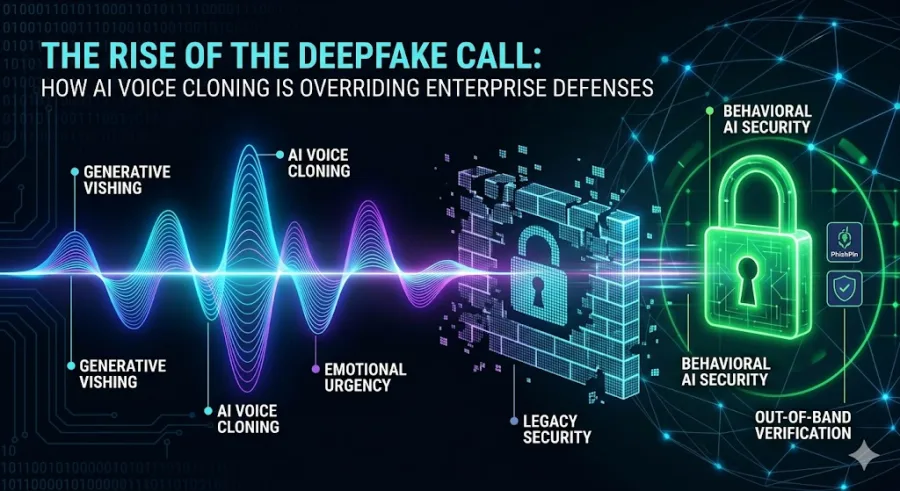
We are seeing a massive spike in AI-driven Vishing (Voice Phishing). A finance manager receives an urgent, late-Friday call from what sounds exactly like their company’s CFO, authorizing an emergency vendor payment. Because the voice is identical and the caller ID is spoofed to look internal, the employee bypasses standard protocols. By Monday, millions of dollars are gone.
Why Traditional Security is Failing
The reason these attacks are so wildly successful comes down to biology: our brains are hardwired to trust our ears.
When you see a suspicious link, your guard goes up. When you hear the crying voice of your child or the authoritative voice of your boss, adrenaline floods your system. The panic completely overrides logic, forcing victims to act instantly before verifying the truth.
Furthermore, traditional anti-malware and firewalls cannot block a phone call. In 2026, the human ear is no longer a reliable firewall.
How to Fight Back: The "Family & Corporate Safe-Word" Strategy
To survive the era of deepfake audio deception, you need to implement a new layer of verification.
1. Establish a "Safe-Word"
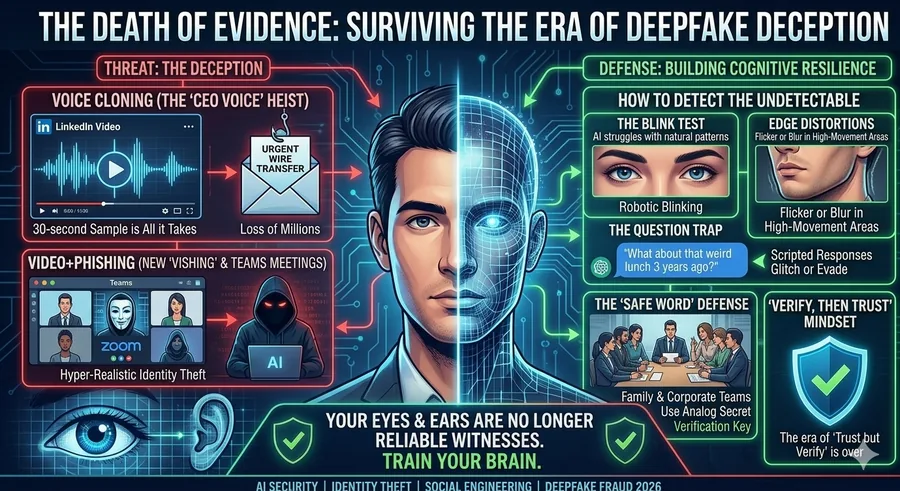
Sit down with your family tonight and establish a secret emergency safe-word or phrase. It should be something simple but completely unguessable (not a pet’s name or a birthdate that can be found online). If someone calls claiming to be in danger or demanding money, ask for the safe-word. If they can’t provide it, hang up immediately.
2. Implement a "Callback Protocol" at Work
For businesses, a voice authorization should never be the final approval for money transfers. Implement a strict "Two-Channel Verification" policy. If the CEO calls asking for a wire transfer, the employee must hang up and call the CEO back on an entirely separate, pre-verified internal number, or confirm via a secondary video call.
3. Limit Your Public Voice Footprint
Be mindful of what you post online. If your social media profiles are public, scammers can easily rip your audio to clone your voice. Keep family videos private, and warn employees about the dangers of posting long-form videos of themselves speaking on public corporate channels.
Trust, But Cross-Check
Technology has outpaced our natural instincts. In 2026, hearing is no longer believing. The next time you receive an urgent, emotionally charged phone call demanding money or data—take a deep breath, pause for five seconds, and verify through a trusted second channel.
Is your brand being impersonated?
PhishPin finds lookalike domains, fake profiles and phishing kits that copy your brand - and gets them taken down. Get a confidential 24-hour audit.
Get my free audit