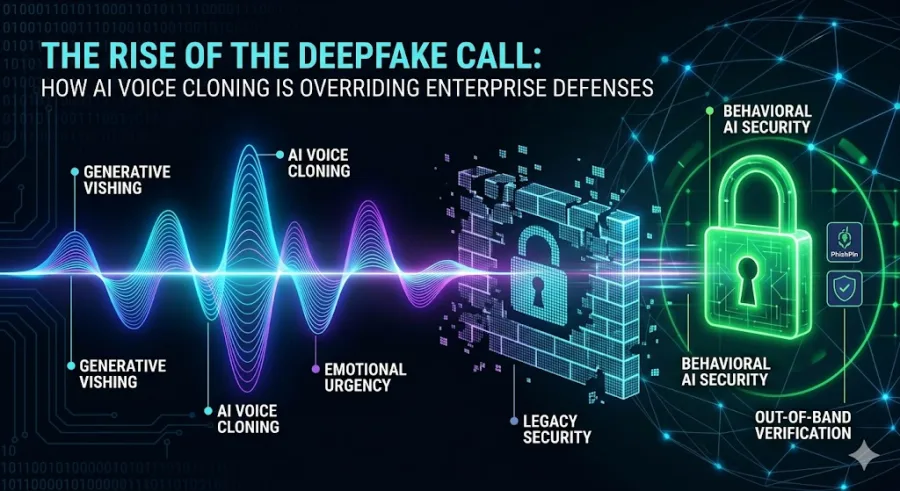
The Rise of the Deepfake Call: How AI Voice Cloning is Overriding Enterprise Defenses
The traditional corporate firewall is facing an identity crisis. For years, organization-wide security protocols focused heavily on email verification. Employees were taught to look for malicious domain extensions, examine message headers, and verify weirdly worded text requests.
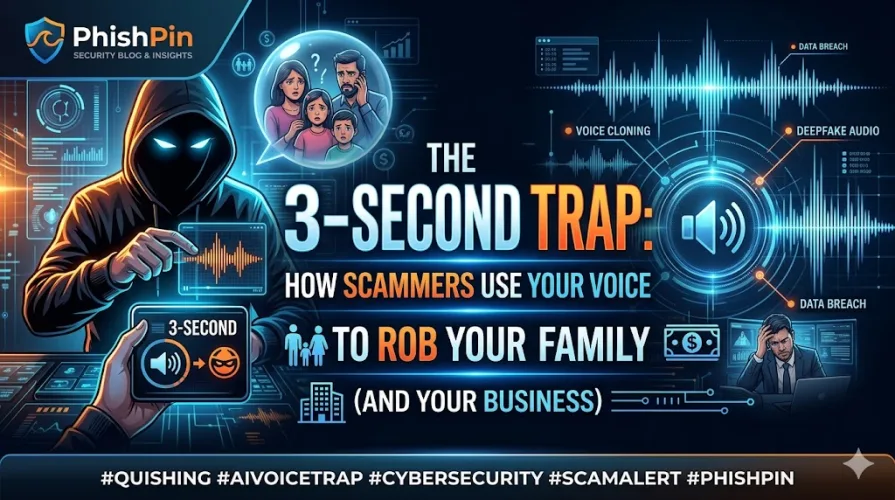
But threat actors have found a way to bypass text altogether by moving directly to voice. Powered by advanced generative AI diffusion and transformer models, cybercriminals can now clone an executive's voice with staggering accuracy using as little as three seconds of public audio data.
The result is a devastating wave of multi-channel social engineering attacks where an employee receives a perfect, real-time phone call or voice note from "the CEO" or an authorized vendor demanding an urgent action. To secure your corporate perimeter, you must understand how AI voice cloning operates and how to establish a bulletproof verification process.
What is AI Voice Cloning Fraud?
AI voice cloning fraud, often referred to as generative vishing, is the practice of using deep-learning software to replicate the unique vocal timbre, speech cadence, and emotional inflections of a specific person.
Attackers harvest high-quality audio files from publicly available corporate webinars, podcast appearances, media interviews, or social media videos. They feed this data into a malicious generative voice model to produce synthetic speech that can either be pre-recorded or streamed dynamically during a live conversation.
Why Generative Voice Scams Outsmart Traditional Security
Traditional authentication protocols rely heavily on human biometric recognition—the basic idea that "if I know what my boss sounds like, I can trust the call." Generative AI weaponizes this exact psychological shortcut.
Exploiting Emotional Urgency: Attackers don't just mimic the voice; they use behavioral profiling to script realistic, high-pressure scenarios. Common tactics include an executive claiming they are "boarding a flight" or "stuck in an emergency board meeting" and need a critical invoice paid immediately.
Bypassing Biometric Controls: Many modern financial institutions and internal support desks use automated voice biometrics to verify user identities over the phone. Advanced AI cloning models are now precise enough to successfully trick these biometric algorithms, gaining direct access to sensitive banking networks.
The Multi-Channel Trap: These attacks are rarely isolated events. Cybercriminals frequently execute a blended attack strategy: they send an AI-crafted phishing email or text message outlining a problem, followed moments later by a cloned voice call that "confirms" the request, creating an airtight illusion of legitimacy.
Technical Red Flags of a Cloned Voice Call
While generative audio has achieved unprecedented realism, synthetic media still carries subtle, exploitable anomalies that alert employees can catch:
Unnatural Speech Cadence: Listen closely for robotic pacing, unusually uniform pauses between sentences, or an odd lack of natural breathing sounds and verbal filler words (like "um" or "uh").
Audio Quality Fluctuations: Watch out for sudden shifts in background noise or voice quality during the call. This often indicates the attacker is jumping between pre-recorded AI audio blocks or struggling with a slow real-time processing connection.
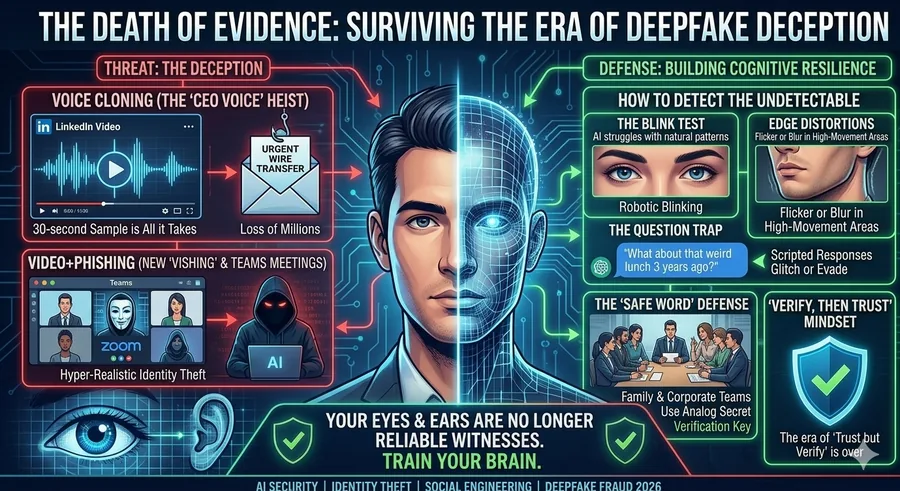
Refusal to Accept a Callback: If the caller adamantly refuses to let you hang up and call them back on their known corporate number, or if they insist on staying exclusively on an unverified third-party communication channel like WhatsApp or Signal, it is likely a trap.
The Zero-Trust Audio Rule: Treat voice exactly like unverified text. If a phone call or audio clip involves modifying financial routing numbers, changing payroll details, or executing an emergency transfer of data, treat it as hostile until verified through an independent channel.
Hardening Corporate Security Frameworks with PhishPin
Defending against synthetic audio attacks requires moving away from visual and audible "vibes" and leaning strictly into deterministic, policy-driven verification.
Implement Out-of-Band Callbacks: Establish a non-negotiable company policy stating that any urgent, high-risk financial or operational request made over the phone must be verified by hanging up and calling the individual back on a pre-established, trusted internal extension.
Deploy Secret Safe Words: For ultra-sensitive operations, such as wire transfers or infrastructure access changes, organizations should implement internal, rotating cryptographic passphrases or "safe words" that are never transmitted digitally over email or chat.
Modernize Threat Simulation Programs: Traditional phishing simulation text links are no longer enough. Forward-thinking companies must leverage tools like PhishPin to run dynamic, multi-channel social engineering simulations that train employees to recognize the intersecting patterns of modern, AI-driven manipulation.
Is your brand being impersonated?
PhishPin finds lookalike domains, fake profiles and phishing kits that copy your brand - and gets them taken down. Get a confidential 24-hour audit.
Get my free audit